S U C C E S S S T O R Y
Centralizing Equipment Planning for Multi-Site Ambulatory Facility Design
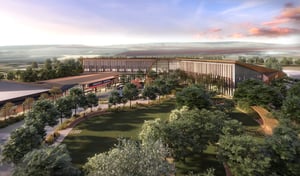
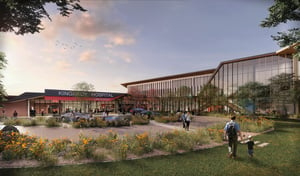
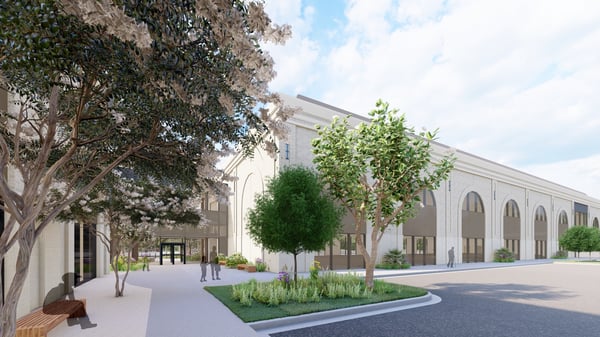
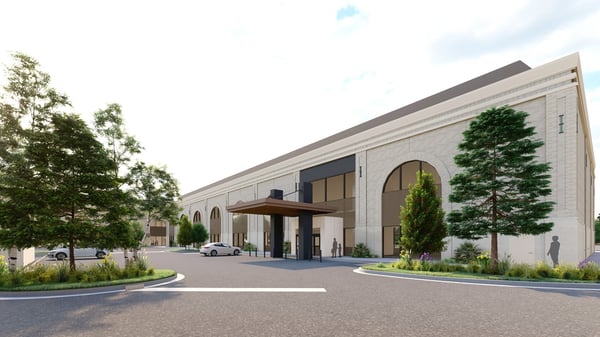
Baptist Health System (Jacksonville) (BHS) is a major regional healthcare system expanding its ambulatory footprint with Seven Pines Medical Office Building I & II; a two-building, new-construction program delivering outpatient and medical office space. E4H Architecture led the project through detailed design, procurement, and into construction, managing a complex clinical equipment program that demanded precision at every phase. For a multi-building healthcare program of this scale, the accuracy and accessibility of equipment data wasn't just a workflow preference — it was a capital and operational imperative.
The Challenge
Before dRofus, equipment planning on healthcare projects like BHS Seven Pines relied heavily on long, room-by-room coordination meetings between the design team and the client. While this approach was functional, it was slow, resource-intensive, and inherently error-prone. Detailed equipment requirements captured in meeting notes could be misheard, misinterpreted, or simply missed. In a healthcare environment where every piece of equipment has spatial, utility, and code implications, a single missed item can cascade into redesign, procurement delays, or compliance exposure.
The risks were:
-
Scope gaps: Equipment items identified verbally but not formally documented could fall through the cracks between design phases
-
Scheduling burden: Frequent alignment meetings were difficult to coordinate given the other responsibilities of clinical stakeholders
-
Multiple sources of information: Requirements lived in meeting notes, emails, and spreadsheets — not in the design environment where decisions were being made
-
Compliance exposure: With FGI guidelines and local code standards governing healthcare facility equipment, gaps in documentation translate directly into regulatory risk
Why Change Was Needed
As the project expanded across two facilities, equipment decisions multiplied, along with the risk of inconsistency. Leadership saw that room-by-room meetings relied too heavily on attendance and note-taking, introducing risk in a code-driven environment. The team needed a structured, reliable way to capture and validate requirements that stayed with the project, not just in meeting notes.
The Solution
E4H Architecture utilized dRofus as the central platform for equipment and requirements management across both buildings in the BHS Seven Pines program. Rather than relying on meeting-by-meeting documentation, the client's equipment requirements were entered directly into dRofus, accessible in real time by the entire design team at any phase.
Key capabilities deployed across the program included:
-
Equipment & FF&E Management: Full equipment schedules managed within a structured, centralized database, linked directly to project rooms and spaces
-
Standard & Custom Reports: The team could generate reports on demand to validate design status, track outstanding items, and support procurement decisions
-
Version Control & Change History: Every requirement change was logged with full traceability, eliminating ambiguity about what was agreed and when
-
Design-to-Construction Data Continuity: Data structured during design carried forward through procurement and construction without reinput or reformatting
The shift wasn't just technological — it was a workflow transformation. Instead of running the design process around the meeting, the team ran the meeting around the data.
The Results
Quality and Accuracy
dRofus eliminated the single greatest risk in the previous process: missing equipment. With all requirements captured and accessible in one platform, the design team always had a verified reference point, regardless of who attended which meeting. Requirement accuracy improved across all project phases, and the risk of conflicting or duplicate entries was significantly reduced through data consistency controls and version tracking.
Process Efficiency
The most immediate benefit was the purpose of meetings; rather than scheduling room-by-room walkthroughs to discuss equipment requirements, the design team could access current, client-approved requirements directly from dRofus; using meetings for validating decisions, not data collection. Change management became faster and more reliable, with updates reflected across the platform in real time rather than propagating through document revisions.
Cost and Risk Control
Centralized equipment data gave the project team earlier visibility into scope and area deviations, supporting more accurate FF&E budget forecasting. By catching equipment gaps during design, rather than during procurement or construction — the team avoided the cost premium of late-stage changes. Compliance validation against FGI guidelines and local standards was built into the workflow, reducing the risk of costly post-permit revisions.
Collaboration and Transparency
dRofus served as a shared environment for the client and design team, giving Baptist Health direct input into the platform and direct visibility into how their requirements were being reflected in the design. This transparency reduced misalignment and accelerated decision-making by eliminating the delay between client input and design team awareness.
Lifecycle Impact
Data structured in dRofus during design did not stop at construction. Equipment schedules, room data, and requirement documentation were carried forward to support procurement, specification, and construction handover, giving downstream teams the same reliable information environment the design team depended on. This continuity created a reusable data asset for future BHS facility planning and facility management.
Strategic Impact
For Baptist Health (Jacksonville), the BHS Seven Pines program represents more than two new buildings — it's a model for how ambulatory expansion should be managed. By adopting dRofus as the requirements and equipment management platform, the health system gained something that transcends any single project: governed, structured planning data that can be reused, audited, and scaled across future facilities.
For healthcare systems with active capital programs, this matters at an executive level:
-
Portfolio governance: Consistent data standards across projects means requirements don't have to be rebuilt from scratch for each new facility
-
Capital confidence: Equipment and FF&E data tied to verified requirements supports more accurate budget forecasting and fewer change order surprises
-
Compliance: Auditable requirement documentation supports FGI and local code compliance reviews throughout design and post-occupancy
-
Digital continuity: Design-to-construction data continuity lays the foundation for facility management and long-term digital twin integration
When structured planning data is treated as a strategic asset — not just a project deliverable — healthcare systems gain lasting value far beyond the certificate of occupancy.
Ready to Transform How You Plan?
See how dRofus helps healthcare teams centralize requirements, reduce risk, and deliver with confidence. Learn More