

Why IPD Projects Need a Shared Source of Truth for Room and Asset Data
Integrated Project Delivery depends on every stakeholder working from reliable, shared information. When room data, asset requirements and BIM updates are managed across spreadsheets, PDFs, emails and disconnected systems, teams spend too much time reconciling information and too little time making decisions.
dRofus helps AECO teams manage room data, asset requirements, BIM-linked information, validation and reporting from one shared source of truth.

PRACTICAL WALKTHROUGH
How dRofus Turns Project Information into Connected Data
See how dRofus helps teams move from scattered project information to structured, connected room and asset data.
This walkthrough shows how teams can manage rooms, requirements, equipment, BIM links and reporting in one shared environment, reducing spreadsheet handoffs and improving coordination across stakeholders.
WORKFLOW VIDEOS
Explore practical dRofus workflows
These workflow videos show how connected room and asset data supports BIM coordination, validation and structured project delivery.
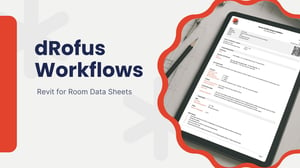
Room data becomes more valuable when it is connected to BIM. With dRofus, teams can coordinate room requirements, room data sheets and model information without relying on disconnected spreadsheets.
Asset and equipment requirements can be validated against the model, helping teams identify missing, duplicated or inconsistent information earlier in the project.

A shared source of truth also depends on clear data connections between the model and the project database. This workflow explains how dRofus attributes can be linked to model parameters to support structured BIM coordination.

What a shared source of truth helps IPD teams do
Manage room data, space requirements and room data sheets in one structured environment instead of separate files.

Keep room and asset data aligned throughout the project lifecycle
dRofus helps AECO teams reduce spreadsheet handoffs, improve BIM-linked coordination and keep room and asset data aligned throughout planning, design, construction and handover.
By connecting requirements, rooms, assets, model data and reporting in one shared environment, project teams can make more confident decisions and reduce coordination risk across the entire delivery process.