
Design, Deliver and Run Airports with a Unified Data Backbone
Design safer, more efficient terminals, hangars, and support facilities with data you can trust. dRofus helps aviation owners and operators centralize requirements, standardize space and equipment, and manage complex stakeholder coordination across an entire airport or network of airports.
One Continuous Airport Data Backbone
Airport projects generate large volumes of information across planning, design, construction, operations and maintenance. Without a structured foundation, critical data becomes fragmented across BIM models, spreadsheets, documents, asset systems and operational tools.
dRofus creates a governed data backbone for spaces, requirements, assets and systems during planning and delivery. dRofus dTwin connects that foundation to live airport operations, helping owners improve performance, safety, passenger experience and long-term decision-making.

Define airport spaces, systems, assets and requirements in one structured source of truth, creating consistent data from the earliest planning stages.

Coordinate BIM, validate design intent, manage change and maintain reliable asset information throughout project delivery and handover.

Connect BIM, FM, IoT, asset and operational data to support real-time visibility, predictive insight, passenger flow understanding and continuous improvement.
One Continuous Airport Data Backbone
Airport projects generate large volumes of information across planning, design, construction, operations and maintenance. Without a structured foundation, critical data becomes fragmented across BIM models, spreadsheets, documents, asset systems and operational tools.
dRofus creates a governed data backbone for spaces, requirements, assets and systems during planning and delivery. dRofus dTwin connects that foundation to live airport operations, helping owners improve performance, safety, passenger experience and long-term decision-making.
“dRofus puts the output at the centre, which in the reality of a client organization is what matters most.”

“We are delighted that Vienna Airport is now expanding the use of our solution across its entire lifecycle. Our software platform for digital twins is particularly well-suited for complex ecosystems such as airports.”

“We look forward to a long-term collaboration with Vienna Airport, implementing our industry leading dRofus dTwin solution for lifecycle asset management.”


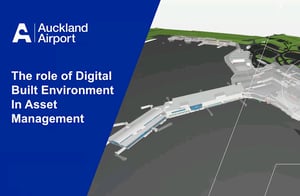
A review of the Digital Information Strategy at Auckland Airport
The scale of Auckland Airport’s infrastructure projects necessitates digital replicas to support the design, construction, and management of new and existing airport assets. With data management being at the centre of this project, Karl Fitzpatrick explains how dRofus is an intergra part of the incremental digital strategy roll out and steps taken so far as part of the technology stack on the project.

Owners Choose dRofus
Unlike generic planning tools, dRofus gives aviation owners control and confidence to deliver operationally ready terminals — aligned to passengers, partners, and regulators —without scope drift, redesign, or disruption to live airport operations.
Create a structured, trusted source of truth for airport spaces, assets, systems and requirements, giving every stakeholder access to consistent, reliable information throughout planning, delivery and operations.
Coordinate planning, BIM and stakeholder requirements across complex airport environments while reducing rework, clashes and project risk.
Enable architects, engineers, operators, consultants and contractors to collaborate around shared, governed project data, improving coordination, accountability and decision-making across teams.
Capture asset data and documentation in one structured environment and validate it against defined standards, creating a reliable, audit-ready foundation for handover and operations.
Apply consistent classification systems, naming standards and asset numbering structures across terminals, systems and operational spaces, improving governance, integrations and lifecycle continuity.
Maintain connected asset and equipment data from planning through operations while linking inputs from engineering, construction, facilities and finance teams in one continuous lifecycle history.
Owners Choose dRofus
Unlike generic planning tools, dRofus gives aviation owners control and confidence to deliver operationally ready terminals — aligned to passengers, partners, and regulators —without scope drift, redesign, or disruption to live airport operations.
Terminal layouts, functions, and capacities are validated against real operational needs —passenger flow, baggage handling, security, concessions — reducing last-minute fixes and compromises.
Airlines, security agencies, border control, retail, ground handling, and operators work from a single set of owner-approved requirements —preventing conflicting assumptions and missed needs.
Continuous validation of spaces and functions provides early visibility into scope and capacity, minimizing change orders, cost escalation, and funding risk.
dRofus supports phased terminal development so today’s decisions do not limit future expansion, flexibility, or evolving airline and passenger demands.
By identifying gaps and conflicts early, owners avoid late-stage redesign caused by missing functions, incorrect adjacencies, or under-sized systems.
All functional, spatial, operational, and technical requirements are centralized —eliminating fragmented spreadsheets, PDFs, and stakeholder-specific documents.
Capture asset data and documentation in one structured hub, then validate it against defined standards and requirements, helping airport owners identify gaps, duplicates and errors early while creating a reliable, audit-ready foundation for operations and lifecycle planning.
Connect Airport Planning with Real-Time Operations
Create a trusted foundation for airport data during planning and delivery, then activate it in operations with dRofus dTwin. Improve performance, safety, passenger experience and long-term decision-making with one continuous data backbone.
Aviation Resources


Key Challenges in Aviation Facility Planning
Planning and aviation projects is more complex than ever. Between rising construction costs, evolving models, and strict regulatory requirements, aviation planning organizations face mounting pressure to get it right from the start.
![AdobeStock_185724146_Preview]()
Disconnected Teams and Data Sources
In aviation facility planning, teams often work across disconnected tools and data sources, making it difficult to align requirements, space data, and equipment information. This fragmentation leads to inconsistent decisions, poor coordination between disciplines, and increased risk of rework and delays across the project lifecycle.
![AdobeStock_1379659203_Preview]()
Managing Regulatory Complexity
Aviation facilities must comply with a complex web of international, national, and airport-specific regulations that evolve over time. Managing these requirements across multiple teams and project phases is challenging, increasing the risk of non-compliance, design revisions, and costly delays.
![AdobeStock_1637411483_Preview]()
Design Rework and Scope Changes
In aviation projects, late changes to requirements, layouts, or equipment often ripple across multiple disciplines and systems. Without a centralized source of truth, these scope changes lead to design rework, coordination issues, and escalating costs throughout planning, design, and delivery.
![AdobeStock_211795877_Preview]()
Facility Scalability and Coordination
Aviation facilities must scale and adapt to changing passenger volumes, operational needs, and future expansions. Poor coordination between planning, design, and operational data makes it difficult to design flexible facilities, increasing the risk of inefficient layouts and costly modifications over time.

6 Ways Aviation Organizations Use dRofus
From early planning to live airport operations, dRofus and dTwin help aviation owners structure, connect and activate the data needed to plan better facilities, reduce risk and optimize performance.
See how space is used by bringing real-time occupancy and operational data into one view, helping you improve efficiency and reduce costs
Use dRofus dTwin to connect BIM data from design and construction with facility management, improving performance and delivering long-term value.
Use dRofus dTwin to combine real-time energy and occupancy data, spot energy waste, and take action to cut costs and emissions.
dRofus dTwin brings operational, energy, and occupancy data together in real time, giving you clear insights to improve decisions, performance, and costs.
With dRofus dTwin, teams can inspect and visualize assets remotely, cutting down on site visits while reducing workload, costs, and emissions.
Track performance in real time, detect issues before they escalate, and automate responses to reduce downtime and improve efficiency.
What is dRofus?
dRofus is a centralized planning, requirements, and data management platform designed for complex facilities such as airports. It enables aviation owners and project teams to manage space programs, standards, equipment, and requirements across planning, design, construction, and operations—while providing a structured data foundation for digital twin workflows.
How does dRofus support early planning and capacity analysis for airports?
dRofus enables rapid development of space programs, capacity models, and scenario testing during early planning phases. Aviation teams can evaluate alternatives for terminals, gates, baggage systems, and support facilities using structured, reusable data instead of disconnected spreadsheets.
Can dRofus help standardize requirements across multiple airport facilities or programs?
dRofus enables detailed definition and management of equipment, systems, and assets—including quantities, specifications, and spatial relationships. This structured data supports procurement planning, coordination with engineering disciplines, and reliable handover information.
How does dRofus handle equipment and systems planning in aviation projects?
dRofus enables detailed definition and management of equipment, systems, and assets—including quantities, specifications, and spatial relationships. This structured data supports procurement planning, coordination with engineering disciplines, and reliable handover information.
How does dRofus integrate with BIM workflows for airport design and delivery?
dRofus integrates with BIM authoring tools such as Revit and Archicad, enabling bi-directional data flow between models and the planning database. This ensures alignment between requirements, design intent, and modeled solutions throughout the delivery process.
What role does dRofus play in building a digital twin during airport delivery?
dRofus acts as the authoritative source of structured planning and asset data that feeds the digital twin. When combined with BIM and other data sources, it ensures that the digital twin reflects validated requirements, spaces, and equipment—not just geometry—creating continuity from early planning to handover.
How does dRofus support digital twin use cases during airport operations?
In an operational digital twin environment (e.g. via dTwin), dRofus provides trusted lifecycle data that supports maintenance, performance analysis, renovations, and future expansions. This allows airport operators to use the digital twin for informed decision-making long after construction is complete.
How does dRofus improve collaboration across aviation stakeholders?
By providing a single source of truth for space, requirements, and equipment data, dRofus aligns owners, planners, architects, engineers, and contractors around the same up-to-date information—reducing miscommunication, rework, and scope drift in complex airport projects.
How can aviation organizations get started with dRofus and digital twin workflows?
Aviation organizations can start with a dRofus implementation focused on standards and planning data, then progressively connect BIM and digital twin solutions such as dTwin. Onboarding includes importing existing data, configuring templates, and supporting teams so value is realized early and scaled over time.